Letting Go to Lead: How Aikido's Principle of Non-Resistance Builds Genuine Authority
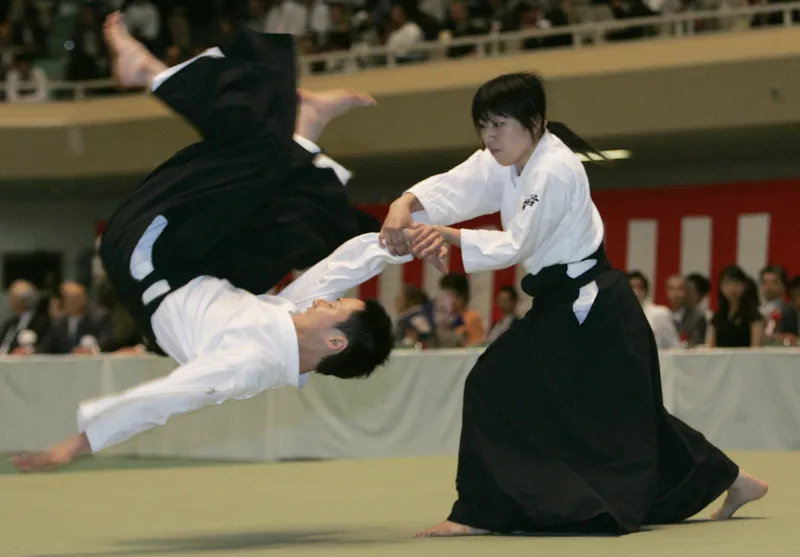
Photo: aikido instructor guiding student with calm leadership in dojo, via www.bjjee.com
There is a moment every new aikido student encounters, usually within the first few months of training, when an instructor offers a piece of advice that seems almost absurd: stop trying to win. Stop pushing back. Stop controlling the outcome. For Americans raised on a cultural diet of competitive achievement and individual willpower, this instruction can feel like a quiet form of surrender. Yet practitioners who stay with aikido long enough invariably discover that this release is not defeat—it is the doorway to a different and more durable kind of power.
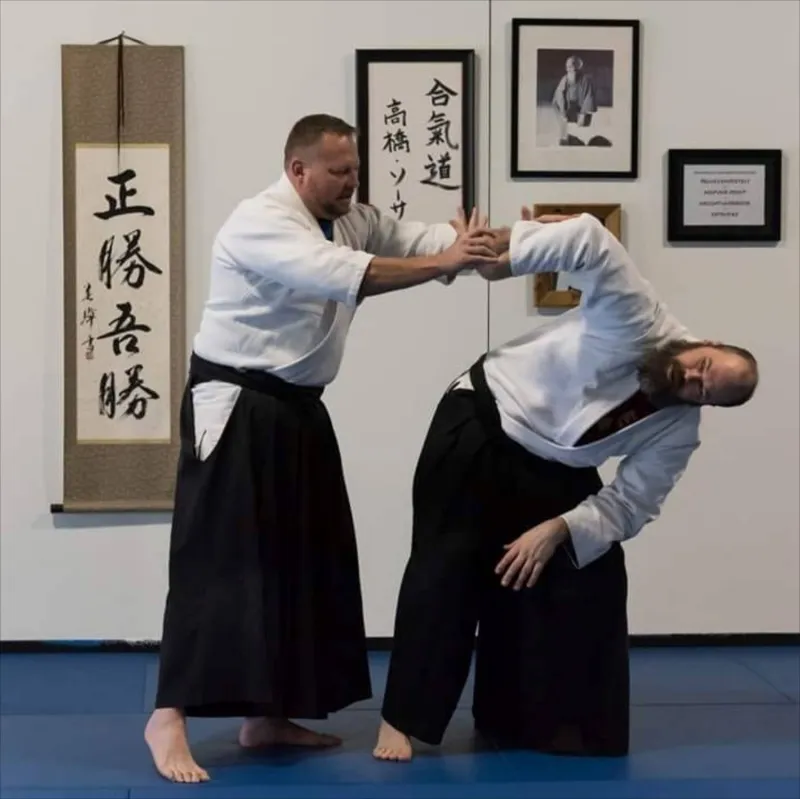
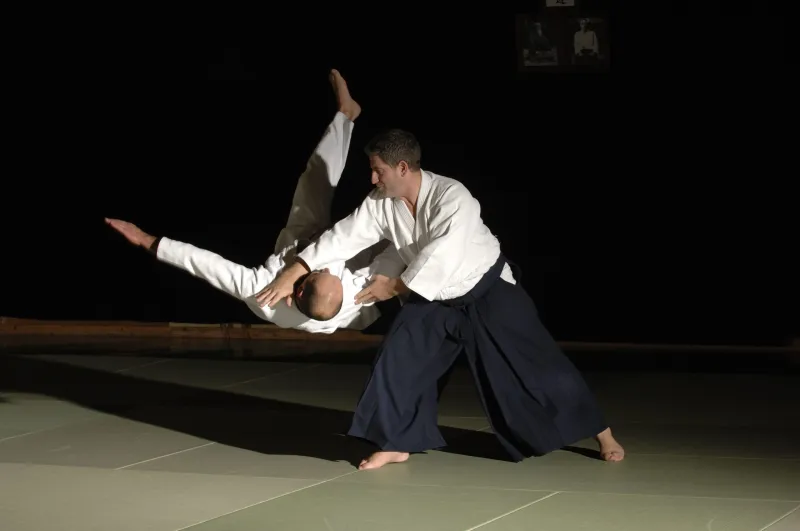
Aikido's foundational principle, often rendered as aiki or harmonious energy, asks the practitioner to receive an attack by joining its momentum rather than opposing it. The technique does not begin with resistance; it begins with acceptance. From that acceptance, redirection becomes possible. The attacker's force is neither absorbed nor repelled—it is guided, transformed, and ultimately resolved without destructive collision. What emerges from this process is something the mat alone cannot fully contain.
The Psychology of Releasing Control
Modern psychology offers a framework that aligns closely with what aikido has long embodied. Research on psychological flexibility—the capacity to adapt to changing circumstances without rigidity—consistently links reduced attachment to specific outcomes with greater resilience, improved decision-making, and more authentic leadership. When individuals cling to a fixed result, they narrow their perception and often amplify the very tension they are trying to dissolve.
For aikido practitioner and organizational consultant Diane Mercer of Portland, Oregon, this insight arrived during a period of professional upheaval. After eighteen years in corporate project management, her department was restructured and her role eliminated. Her initial instinct, she recalls, was to fight every aspect of the transition—to push back on timelines, contest decisions, and assert control wherever possible. "I was doing exactly what I'd been trained not to do on the mat," she says. "I was meeting force with force, and I was exhausting myself."
Mercer credits her seven years of aikido training with giving her a practical alternative. She began approaching the career transition the way she might approach a committed grab in the dojo: by first acknowledging the force fully, then moving with it rather than against it. She accepted the restructuring, explored the direction it was already taking her, and ultimately discovered a consulting path she had previously been too occupied to consider. "The moment I stopped trying to control every variable," she says, "I found I had far more influence over where I actually ended up."
Blending as a Leadership Strategy
The implications for leadership are substantial. Traditional models of authority in American professional culture have long emphasized decisiveness, dominance, and the projection of certainty. Effective leaders, the conventional wisdom holds, must command the room. Yet this model frequently produces brittleness. Leaders who cannot tolerate ambiguity, who interpret every challenge as a threat requiring immediate suppression, tend to generate resistance in the very people they are attempting to guide.
Aikido offers a contrasting model. The skilled aikidoka does not dominate the encounter—they redirect it. They listen with their entire body, sense the direction of incoming energy, and position themselves to guide the interaction toward a constructive resolution. Applied to leadership, this translates as active listening before responding, identifying the legitimate energy behind opposition rather than dismissing it, and creating conditions under which conflict resolves without requiring a loser.
Mark Okonkwo, a high school principal in the Chicago area and a shodan-ranked aikido practitioner, describes using this approach during a contentious school board meeting. Faced with organized opposition to a new curriculum initiative, his instinct was to defend the program point by point. Instead, he listened for what the opposition actually valued—parental involvement, academic rigor, community identity—and began reshaping his presentation to honor those values rather than argue against the criticism. "The resistance didn't disappear," he acknowledges, "but it changed character. People felt heard. And when people feel heard, they stop pushing quite so hard."
Navigating Relationships Without Forcing Outcomes
The principle extends into personal relationships with equal relevance. Couples therapists and family counselors frequently note that the most damaging dynamic in struggling relationships is the mutual escalation of control—each partner attempting to secure a particular outcome, each attempt generating a counter-attempt, until the relationship itself becomes the casualty.
Aikido practitioners often describe a gradual shift in how they engage with interpersonal conflict. The training builds what might be called a tolerance for incoming energy. On the mat, a student learns to remain centered while absorbing a strike or a grab, to resist the panic response that demands immediate escape or retaliation. Over time, this capacity transfers. Difficult conversations become less threatening. The need to immediately resolve tension or declare victory diminishes. What remains is a steadier presence—one that can stay engaged without being destabilized.
For Rachel Svensson, a licensed marriage and family therapist in Minneapolis who has practiced aikido for eleven years, this steadiness has become both a personal resource and a professional one. "My clients often come in trying to control their partner's behavior, their children's choices, their family's reactions," she explains. "What I've learned on the mat is that the harder you grip, the more the other person pulls away. Loosening the grip doesn't mean abandoning your values. It means trusting the connection more than the outcome."
The Mastery That Comes After Release
There is an important distinction to draw here. The aikido principle of non-resistance is not passivity. It is not indifference to outcomes or an absence of intention. The practitioner who blends with an attack has not abandoned their purpose—they have simply chosen a more intelligent path toward it. Their technique remains precise, their awareness remains sharp, their commitment to a safe resolution remains absolute. What they have released is the rigid attachment to a single method of achieving it.
This distinction matters profoundly for those seeking to apply these principles beyond the dojo. Releasing control is not the same as relinquishing direction. It means holding your goals with a lighter grip, remaining alert to the actual conditions in front of you rather than the conditions you expected, and trusting that movement—even unexpected movement—can be worked with rather than stopped.
Aikido's paradox, ultimately, is not mysterious. It simply asks us to recognize that force meeting force produces collision, and collision rarely generates the outcomes either party intended. The practitioner who learns to receive, redirect, and resolve—on the mat and off it—discovers a form of authority that does not depend on domination. It depends on relationship. And in that discovery lies something the mat has always been quietly teaching: that harmony, not conquest, is the foundation of genuine strength.