Beyond the Mat: Applying Aikido's Philosophy to Conflict and Communication in Daily American Life
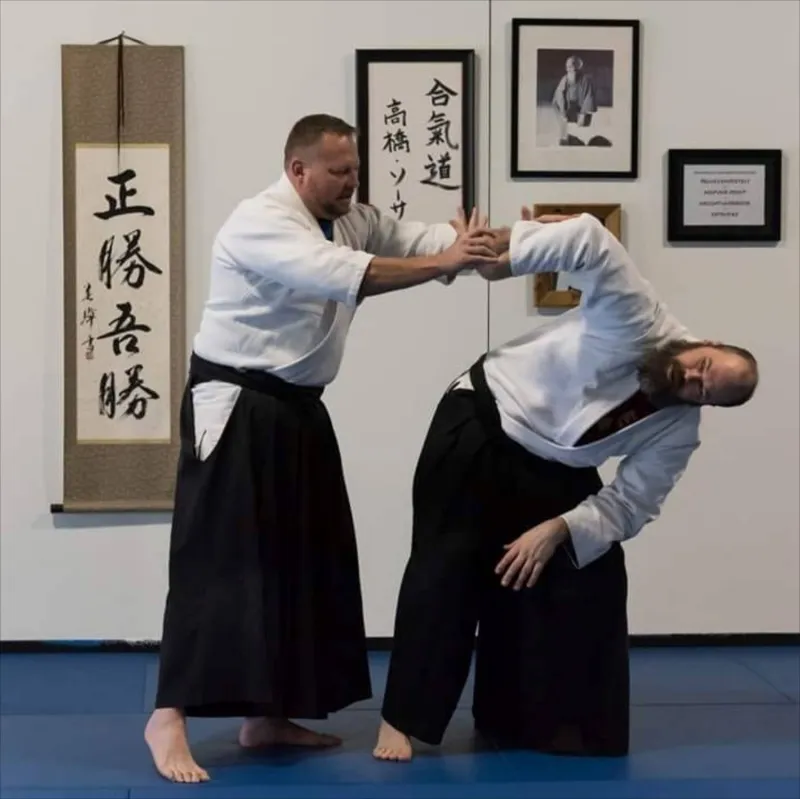
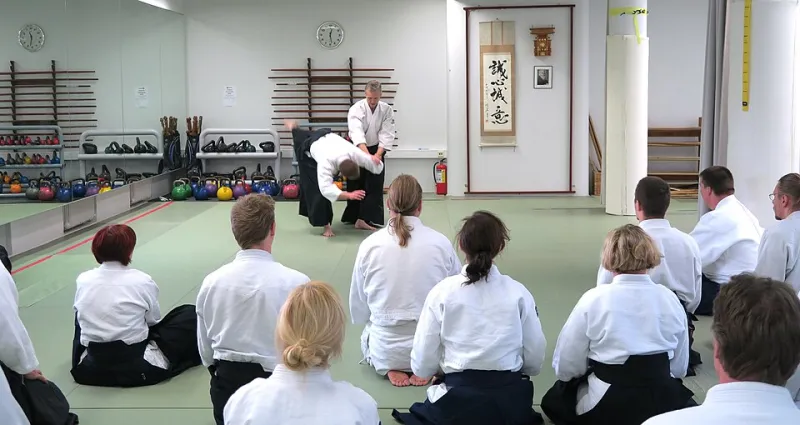
Photo: aikido practitioner calm meditation philosophy dojo community, via wallpapers.com
There is a moment familiar to most experienced aikido practitioners—a moment on the mat when everything clicks. The incoming force no longer feels threatening. Instead of bracing against it, you find yourself moving with it, guiding it, until the confrontation dissolves almost on its own. It is a deeply physical experience. But many long-term students will tell you, often with genuine surprise, that it eventually becomes something more: a way of seeing conflict itself.
This is not a mystical claim. It is a practical observation made by practitioners across the country who have found that the mental and philosophical disciplines cultivated through years of aikido training quietly restructure how they respond to friction in their daily lives. The dojo becomes, over time, a laboratory for the self—and the lessons learned there do not stay neatly inside the training space.
The Principle of Blending: A Different Approach to Disagreement
In aikido, meeting force directly with opposing force is almost always the wrong answer. The art teaches practitioners to "blend"—to move in alignment with an incoming attack rather than against it, absorbing its energy and redirecting it toward a resolution. This principle, known in Japanese as awase, has a direct and underappreciated application in human communication.
Consider the dynamics of a typical workplace disagreement. A colleague presents an argument forcefully. The instinctive response—whether verbal or emotional—is often to push back with equal or greater force. This is the conversational equivalent of standing your ground against a physical charge: it produces collision, not resolution. The aikido-trained response is different. It begins with genuine acknowledgment of the other person's position, a verbal equivalent of stepping offline and moving with the energy rather than against it.
Linda Cho, a marketing director in Seattle who has practiced aikido for eleven years, describes a specific shift in her professional conduct: "I used to walk into difficult meetings with my counter-arguments already rehearsed. Now I walk in trying to understand exactly what the other person is protecting or afraid of. Once I know that, I can find a way to address it that doesn't require them to lose face. That's blending. It's the same thing I do on the mat."
This is not capitulation. Blending in aikido does not mean surrendering one's position—it means declining to waste energy in direct opposition when redirection is more efficient. The same distinction applies in conversation.
Centeredness Under Pressure: The Internal Work
Aikido places extraordinary emphasis on maintaining one's center—both physically, in the sense of body alignment and balance, and psychologically, in the sense of emotional composure. The Japanese concept of hara, often translated as the body's energetic center located in the lower abdomen, serves as the practitioner's anchor during the chaos of technique. Training conditions the practitioner to return to this center reflexively, even under physical duress.
With sustained practice, this conditioning transfers. Practitioners report a measurable change in how they experience stressful situations outside the dojo. The same internal cue—returning awareness to the body's center, breathing deliberately, resisting the pull of reactive emotion—that stabilizes them during a vigorous randori session begins to activate naturally during a heated argument with a family member or a difficult phone call with a client.
Marcus Webb, a high school teacher in Atlanta who holds a second-degree black belt, reflects on this development: "Teenagers are experts at triggering adult reactivity. Early in my career, I'd get drawn into power struggles constantly. After years of aikido, I started noticing that I had a kind of pause available to me—a split second where I could choose my response. That's zanshin. It's not something I consciously imported from the dojo. It just showed up."
Stress management researchers would recognize this description. The capacity for non-reactive awareness is associated with reduced cortisol response, clearer decision-making, and improved interpersonal outcomes. Aikido does not market itself as a stress management program, but it trains many of the same cognitive and physiological capacities.
Neutralizing Aggression Without Escalation
One of aikido's most distinctive qualities is its orientation toward neutralization rather than destruction. Techniques are designed to control and redirect an attacker without causing unnecessary harm—a philosophy that reflects the art's broader ethical commitments. This orientation carries meaningful implications for navigating social and familial conflict.
Aggression in everyday life rarely arrives as a physical threat. More often, it appears as raised voices, dismissive language, passive resistance, or the kind of cold withdrawal that can be more destabilizing than open argument. Aikido practitioners, accustomed to working with aggressive energy on the mat, often develop an unusual tolerance for these expressions—not because they are indifferent, but because they have learned to receive force without being destabilized by it.
This capacity allows for a qualitatively different kind of response. Rather than matching aggression with aggression or retreating into defensive silence, the aikido-informed practitioner can hold space for the other person's intensity while gently steering the interaction toward resolution. It is, in effect, a verbal and emotional irimi—an entry into the conflict rather than a retreat from it, executed with enough composure to change its direction.
Family therapists in the US increasingly recognize the value of this orientation. While most do not frame it in martial arts terms, the underlying dynamic—approaching conflict with curiosity and stability rather than defensiveness—is a cornerstone of contemporary conflict resolution practice.
Practical Frameworks for Daily Application
For practitioners looking to consciously extend aikido's philosophy into their daily interactions, a few concrete frameworks prove useful:
Identify the line of attack. In aikido, stepping off the line is essential. In conversation, this means recognizing when a discussion has become positional—when both parties are pushing directly against each other—and deliberately introducing a lateral perspective or reframing question that shifts the dynamic.
Find the energy, not the argument. Skilled aikidoka learn to sense the energy behind an attack, not just its surface form. In conflict, this means listening for the underlying concern or fear beneath someone's stated position. Addressing that layer is often far more effective than engaging the stated argument directly.
Practice non-resistance to discomfort. Aikido training involves sustained exposure to physical discomfort in a controlled context. This builds a practitioner's capacity to remain present under pressure without fleeing or escalating. Intentionally remaining present during difficult conversations—resisting the urge to deflect, change the subject, or shut down—is the conversational equivalent.
Return to center before responding. When emotional reactivity spikes, a brief pause—a breath, a moment of internal awareness—functions as a reset. This is not weakness or hesitation. It is the same discipline that prevents a practitioner from making a reckless technique under pressure.
A Philosophy That Travels
Aikido's founder spoke of the art as a path toward harmony—not merely between practitioners on the mat, but between human beings in the broadest sense. Whether or not one accepts the spiritual dimensions of that vision, the practical philosophy it produces is demonstrably transferable. The art trains practitioners to remain calm in the presence of force, to find movement where others see obstruction, and to resolve conflict without requiring the other party's defeat.
In a country where public discourse is frequently adversarial and interpersonal conflict is a near-universal source of stress, these capacities are not trivial. They are, for many practitioners, among the most valuable things the dojo has given them—more durable than any technique, and applicable every single day.