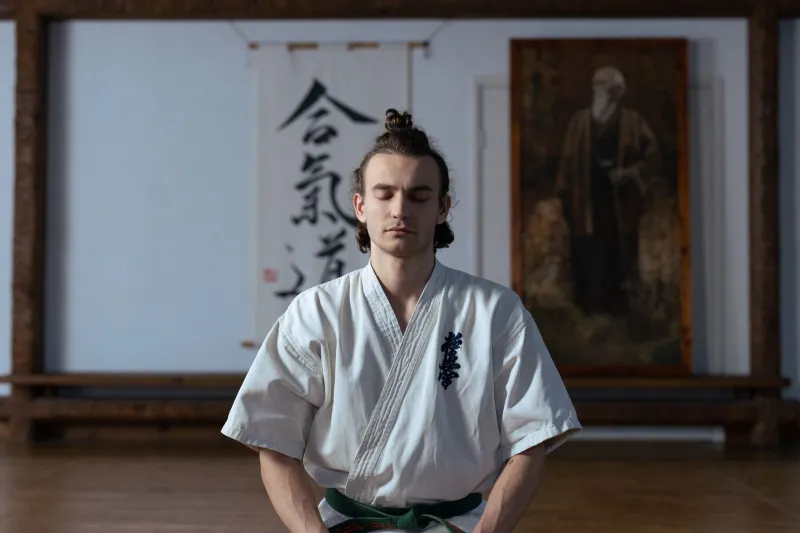
No Sparring, No Problem: How Aikido Practitioners Develop Sharper Combat Instincts Than Many Full-Contact Athletes
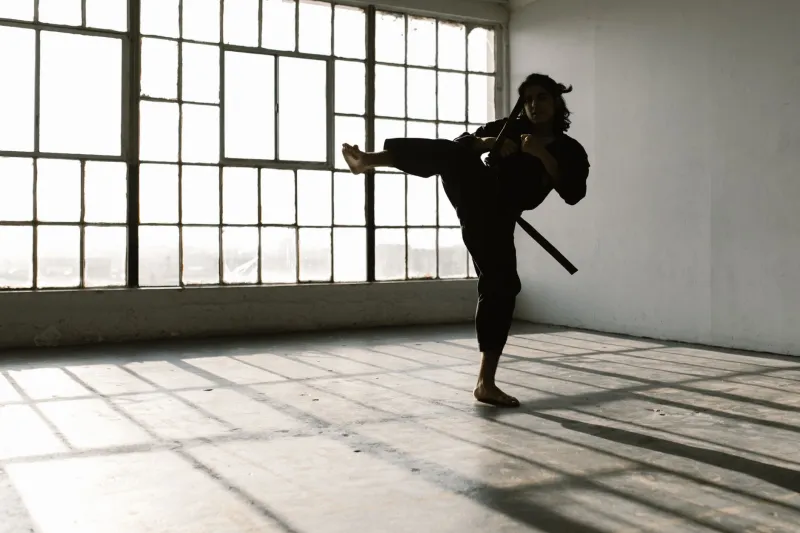
At first glance, the premise seems almost absurd. A martial artist who never competes, never trades blows in a controlled sparring match, and actively trains to avoid harming a partner — how could such a practitioner possibly develop sharper combat instincts than an athlete who drills live fighting week after week? Yet that is precisely what a growing body of neuroscience and motor learning research suggests may be happening on the aikido mat, quietly and without fanfare.
The answer lies not in what aikido practitioners do during training, but in how their nervous systems are being conditioned while they do it.
The Problem with Constant Adrenaline Exposure
Competitive combat sports are built on a compelling logic: simulate real fighting as closely as possible, and your body will learn to handle real fighting. The reasoning is intuitive, and for certain dimensions of physical conditioning it holds up well. Fighters who spar regularly develop cardiovascular resilience, pain tolerance, and the ability to execute techniques under duress.
However, repeated high-adrenaline training also introduces a significant neurological complication. When the stress response is chronically activated, the brain's threat-detection circuitry — centered in the amygdala — becomes increasingly dominant. Decision-making narrows. Peripheral awareness contracts. The practitioner becomes extraordinarily good at responding to the specific patterns of stress they encounter in training, but the cortical flexibility required for nuanced threat assessment can erode over time.
In plain terms: fighters can become highly skilled at fighting the way they train, while simultaneously becoming less capable of reading genuinely novel or ambiguous threats.
What Aikido Trains Instead
Aikido's training methodology operates on a fundamentally different neurological premise. Rather than repeatedly overwhelming the stress response and building tolerance to it, aikido systematically trains practitioners to function before the stress response fully activates.
The practice of ki musubi — blending with a partner's energy at the moment of initial contact — requires practitioners to develop extraordinary sensitivity to micro-signals in posture, grip pressure, weight distribution, and intent. This is not metaphor. Biomechanical research has documented that experienced aikidoka can detect and respond to shifts in a partner's center of gravity within milliseconds of initial contact, well before a committed attack has fully materialized.
This capacity emerges from thousands of repetitions conducted in a relatively calm physiological state. The absence of competitive pressure is not a deficit in the training — it is the mechanism that allows the prefrontal cortex to remain engaged throughout practice. The practitioner is not merely learning techniques; they are training the brain's pattern-recognition architecture to process kinesthetic and spatial information with unusual speed and precision.
Pattern Recognition and the Expert Advantage
Cognitive scientists who study expert performance across domains — from chess grandmasters to elite military personnel — consistently find that genuine expertise is characterized less by superior physical capability than by superior pattern recognition. Experts perceive meaningful structure in situations that appear chaotic to novices, and they perceive it faster.
In martial contexts, this translates to what researchers sometimes call threat recognition latency — the time elapsed between the onset of a threatening movement and a practitioner's initial response. Studies examining experienced practitioners across multiple disciplines have found that this latency is often more closely correlated with years of attentive, deliberate practice than with the volume of competitive sparring.
Aikido's training structure is, in many respects, an extended curriculum in exactly this kind of perceptual refinement. Each practice session requires students to read a partner's intention, identify the geometry of an incoming force, and select an appropriate response — all within fractions of a second, and all without the cognitive shortcuts that aggression and competitive urgency tend to impose.
Muscle Memory Without Aggression
Another dimension of aikido's neurological advantage concerns the emotional valence attached to motor programs. When physical techniques are learned primarily in aggressive, high-stakes contexts, they become neurologically bound to the emotional states present during acquisition. This is useful for replicating performance in similar emotional contexts, but it creates a significant problem: the techniques may fail to activate — or may activate in distorted form — when the emotional context differs from training.
Aikido techniques, by contrast, are encoded through repetition in a state of relative calm and cooperative engagement. The motor programs that govern an irimi nage or a kotegaeshi are not emotionally entangled with anger, fear, or competitive urgency. This means they remain accessible across a wider range of emotional states, including the genuine confusion and ambiguity that characterize real-world threatening situations far more often than the clean adrenaline rush of a scheduled sparring round.
This is a subtle but consequential distinction. When a practitioner's trained responses are not contingent on being angry or frightened enough to execute them, those responses become more reliably available precisely when clear thinking is most needed.
The Role of Uke: Training Threat Recognition Through Partnership
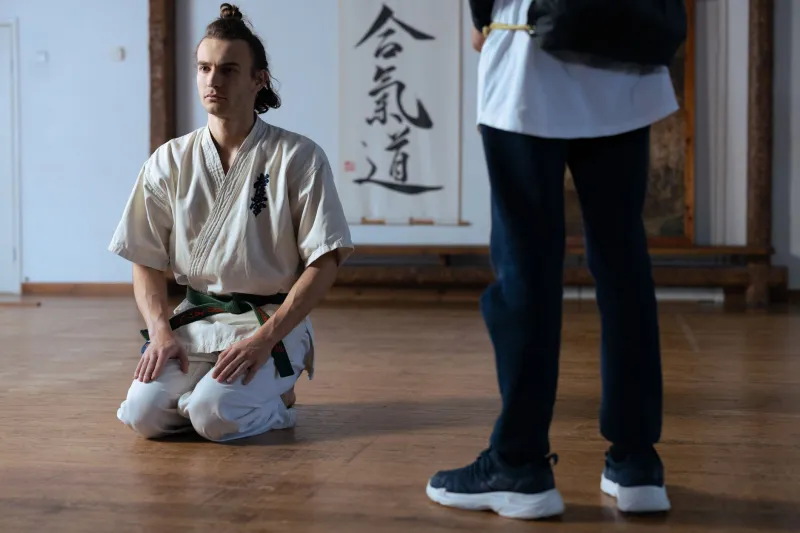
Perhaps the most underappreciated element of aikido's approach to combat readiness is the role of uke — the partner who delivers the attack. In most competitive combat sports, the opponent's goal is to win. In aikido, uke's responsibility is to deliver committed, realistic attacks while also providing honest feedback about whether a technique has genuinely disrupted their balance and structure.
This creates a training dynamic with no precise equivalent in competitive arts. Uke is simultaneously a threat to be read and a collaborator in the practitioner's development. Over time, this dual role trains aikidoka to perceive a potential aggressor not merely as an obstacle to overcome but as a dynamic system with readable intentions and exploitable structural vulnerabilities — a perceptual sophistication that translates directly to real-world threat assessment.
Experienced practitioners often report that this quality of attention — calm, precise, and non-reactive — is precisely what they notice activating in moments of genuine confrontation or emergency, long before conscious deliberation has a chance to engage.
A Different Definition of Readiness
The American martial arts landscape tends to equate combat readiness with toughness: the ability to absorb punishment and keep fighting. Aikido offers a genuinely different framework, one in which readiness is defined as the capacity to perceive clearly, respond proportionately, and maintain composure when circumstances become genuinely threatening.
Neither definition is complete on its own. But for practitioners seeking to develop the perceptual and neurological qualities that underlie effective real-world response — rather than simply the ability to endure a sparring match — aikido's methodology presents a compelling and scientifically coherent case.
The paradox, it turns out, is not a paradox at all. By removing the noise of competition and chronic stress activation, aikido creates precisely the neurological conditions under which genuine combat instinct can develop most fully. Those who train on the aikido path are not avoiding the hard work of developing readiness. They are pursuing a different, and in certain respects deeper, version of it.