The Breath Beneath the Movement: How Aikido's Respiratory Practices Deliver Measurable Benefits for Anxiety and Athletic Performance
Breathing has become a cultural conversation. Yoga studios, wellness podcasts, and fitness platforms have made respiratory training a mainstream pursuit, with methods like the Wim Hof technique and box breathing attracting millions of adherents. Yet within aikido dojos across the United States, a respiratory tradition of considerable depth has been practiced for generations — largely without fanfare, and without the marketing apparatus that has propelled other methods into public consciousness.
That may be changing. As researchers probe the relationship between breath mechanics, nervous system regulation, and cognitive performance, the specific qualities of aikido's approach to breathing are drawing scientific attention. The findings suggest that what aikido practitioners have cultivated on the mat may represent one of the most functionally complete respiratory training systems available — particularly for individuals managing anxiety or seeking sustained athletic output.
What Aikido Breathing Actually Is
Unlike systems that treat breathing as a standalone practice, aikido integrates respiratory discipline directly into movement. The concept of kokyu — often translated as "breath power" — describes the coordinated relationship between breath, physical extension, and the mobilization of ki, or life energy. In practical terms, kokyu training develops the ability to breathe continuously and intentionally even under physical and psychological pressure.
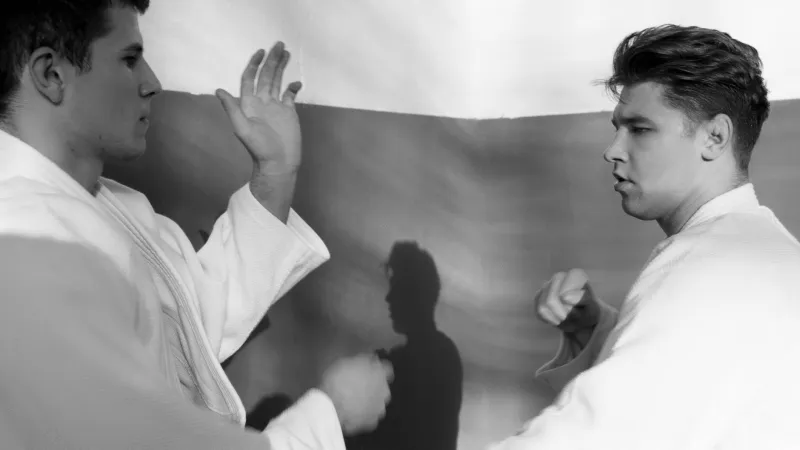
Kokyu-ho exercises, practiced in nearly every aikido class, involve partners working together to develop breath-synchronized extension and stability. Practitioners learn to exhale through exertion rather than holding breath — a habit that has profound physiological consequences. Breath-holding during physical effort is associated with elevated blood pressure, increased muscular tension, and compromised proprioception. Training it out of the body systematically, as aikido does, produces a practitioner whose nervous system behaves very differently under stress than an untrained individual.
Additionally, many dojos incorporate misogi breathing practices — sustained, rhythmic respiratory exercises derived from Shinto purification traditions — as part of warm-up or meditation components. These exercises bear structural similarities to slow-paced breathing protocols studied extensively in clinical literature.
The Neuroscience of Slow, Intentional Breath
Research published in journals including Frontiers in Human Neuroscience and Psychophysiology has established that slow, diaphragmatic breathing at approximately five to six breath cycles per minute produces measurable increases in heart rate variability (HRV) — a widely accepted marker of autonomic nervous system flexibility and resilience. High HRV is associated with better emotional regulation, reduced anxiety, improved cardiovascular health, and faster recovery from stressors.
The breathing pattern cultivated in aikido practice — slow, deep, continuous, and synchronized with movement — aligns closely with the slow-paced breathing protocols shown in clinical research to elevate HRV. Practitioners who train consistently develop a baseline respiratory pattern that keeps their autonomic nervous system operating in a more balanced state even outside the dojo.
Dr. Patricia Nguyen, a sports psychologist based in Chicago who works with both competitive athletes and anxiety disorder patients, began studying aikido breathing after noticing parallels with clinical biofeedback protocols she uses in her practice. "What struck me," she notes, "is that aikido doesn't just teach people to breathe well in a quiet room. It trains them to maintain that breath quality while someone is actively trying to throw them. That transfer to real-world stress is significant."
Comparing the Landscape: Aikido, Yoga, and Wim Hof
Any honest assessment of aikido breathing must acknowledge the broader respiratory training landscape. Yoga's pranayama tradition is ancient, sophisticated, and clinically studied. The Wim Hof method has generated genuine research interest for its effects on immune response and cold tolerance. Box breathing has been validated for acute stress management in military and emergency medicine contexts.
Each approach has genuine merit. The distinctions lie in emphasis and application.
Yoga breathing excels in stillness — practitioners develop extraordinary breath control in seated or reclined positions. The challenge is that this control does not always transfer automatically to dynamic, high-stress physical contexts. Wim Hof's hyperventilation-based technique produces dramatic physiological effects but is not recommended for individuals with anxiety disorders, as the induced hypocapnia can trigger or mimic panic symptoms. Box breathing is highly effective for acute stress regulation but is not typically integrated into sustained physical training.
Aikido's approach occupies a distinctive niche: it trains breath regulation specifically under conditions of physical and psychological pressure, in relationship with another person, over extended periods. This makes it uniquely applicable to the scenarios most Americans encounter when anxiety becomes problematic — interpersonal conflict, high-stakes performance, physical threat — and to athletic contexts where maintaining breath quality during exertion determines endurance and decision-making quality.
Implications for Anxiety Management
For the estimated forty million Americans living with anxiety disorders, the appeal of a practice that systematically trains the nervous system toward greater regulatory capacity — through movement, relationship, and breath simultaneously — is significant.
Anecdotal evidence from practitioners is consistent: many report that regular aikido training reduced both the frequency and intensity of anxiety episodes more effectively than breathing exercises practiced in isolation. The mechanism is plausible. Aikido training creates repeated, controlled experiences of physiological arousal — the body's stress response is activated during vigorous practice — followed by successful regulation. This is essentially the structure of exposure-based therapy, with breath training embedded throughout.
For practitioners already working with mental health professionals, aikido training can serve as a meaningful adjunct — not a replacement for clinical care, but a practice environment where the nervous system learns, through repeated embodied experience, that arousal can be met with regulated breath and purposeful movement rather than panic.
Athletic Performance and Oxygen Economy
Beyond anxiety, aikido breathing has direct implications for athletic performance. Research on respiratory muscle training indicates that diaphragmatic strength and endurance are trainable qualities that meaningfully affect oxygen utilization during sustained effort. Aikido's emphasis on continuous, relaxed breathing during physically demanding practice conditions the respiratory musculature in ways that parallel dedicated inspiratory muscle training protocols.
Practitioners who cross-train in other athletic disciplines — running, cycling, team sports — frequently report that their breath control under exertion improves after sustained aikido training. The ability to maintain slow, full exhalations during high-output efforts delays the onset of the anxious, constricted breathing pattern that accelerates fatigue and degrades decision-making.
For American athletes seeking performance edges that do not require additional training volume, the respiratory conditioning embedded in regular aikido practice represents an underutilized resource. The mat, it turns out, may be one of the most effective breathing laboratories available.