Coming Home to the Dojo: How Aikido Found Its Moment in a Nation Exhausted by Hustle
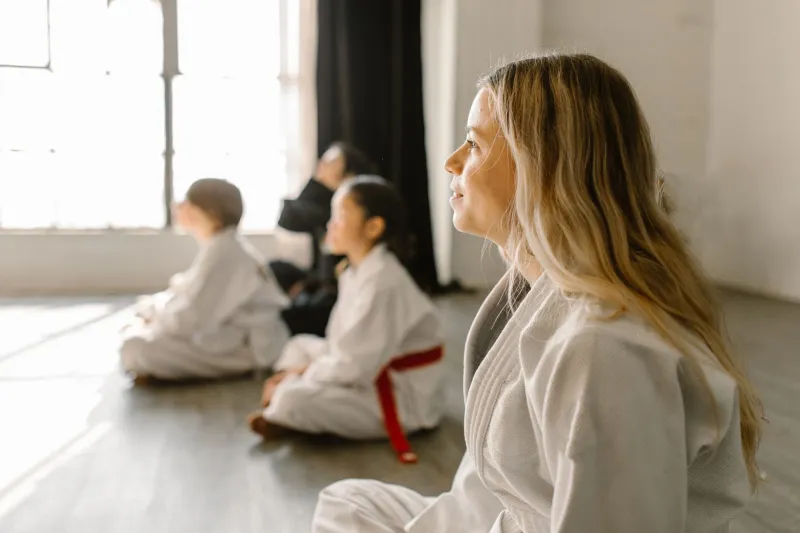
In the spring of 2022, a physical therapist named Rachel W. walked into an aikido dojo in Portland, Oregon, for the first time. She had spent two years working brutal pandemic-era hours, watched colleagues burn out or leave the profession entirely, and emerged from the experience with a bone-deep fatigue that a gym membership and a meditation app had done nothing to resolve. A friend mentioned aikido almost offhandedly. Rachel went, stayed, and has not stopped training since.
"I wasn't looking for a martial art," she says. "I was looking for something that felt human. The dojo gave me that."
Her story is not unusual. Across the United States, aikido schools that weathered the closures and disruptions of 2020 are reporting something that few anticipated: a meaningful, sustained uptick in enrollment, particularly among adults who have never practiced a martial art before. The demographics skew toward the 30-to-55 age range, with a notable representation of women and professionals. The motivations, when students articulate them, tend to cluster around a recognizable set of themes: community, calm, non-competitiveness, and a desire for physical practice that does not feel like another performance metric to optimize.
Aikido, in other words, is having a cultural moment—and understanding why requires looking at what the pandemic actually did to the American relationship with wellness and competition.
The Burnout Economy and Its Discontents
Long before COVID-19, American wellness culture had developed a particular character: intensification as virtue. High-intensity interval training, competitive fitness apps, leaderboard-driven exercise platforms, and the broader ethos of optimization treated the body as a project to be maximized rather than a home to be inhabited. The pandemic did not create burnout, but it compressed and clarified it, stripping away the ambient busyness that had allowed many Americans to avoid confronting how depleted they actually were.
Survey data from the American Psychological Association's annual Stress in America reports documented sustained, elevated stress levels through 2021 and 2022, with particular spikes among younger adults and healthcare workers. Mental health platform usage surged. Gym cancellations outpaced new memberships in many markets. And something more subtle began to shift in how Americans talked about exercise and wellness—a growing fatigue with the language of performance, pushing limits, and grinding through.
Into this cultural space, aikido presents a genuinely different proposition.
What Aikido Offers That Other Practices Do Not
Aikido is, by design, non-competitive. There are no tournaments in most traditional lineages, no rankings against peers, no metrics of dominance. Progress is measured internally—against your own previous understanding of a technique, your own ability to remain centered under pressure, your own capacity for presence with a training partner.
This is not a marketing position. It is a structural feature of the art, embedded in its founding philosophy. O Sensei Morihei Ueshiba developed aikido explicitly as a practice of harmony rather than conquest, and the organizational culture of most dojos reflects this. Training partners are collaborators, not opponents. The advanced practitioner's role is to help the less experienced student understand the technique, not to defeat them.
For Americans arriving from backgrounds in competitive sports or high-pressure professional environments, this can feel genuinely disorienting at first—and then, for many, profoundly relieving.
"I spent fifteen years in finance," says James T., who began training at a dojo in the Boston area in 2021. "Everything was ranked, everything was a competition, even the things that weren't supposed to be. Walking onto the mat and having someone actually try to help me learn something—without any agenda—took me about six months to fully trust. Now I can't imagine my week without it."
Dojo Owners Describe a Changed Landscape
Instructors and dojo owners who spoke with Aikido Path describe a student body that has shifted noticeably in character since 2020. The inquiries they receive are more likely to come from adults seeking community and stress relief than from younger practitioners drawn by self-defense considerations.
Sensei Patricia L., who has operated a dojo in the Minneapolis–Saint Paul area for over two decades, notes that her post-pandemic enrollment includes a higher proportion of women, healthcare professionals, and people who explicitly describe themselves as recovering from burnout. "They're not coming in aggressive or competitive," she observes. "They come in quiet and a little exhausted. The mat meets them exactly where they are."
This observation points to one of aikido's structural advantages in the current wellness landscape: the art's emphasis on gradual progression and its relatively low injury rate make it accessible to people who cannot afford—physically or psychologically—to absorb the punishment that higher-impact practices demand. The research on injury rates in martial arts consistently places aikido among the safest options, a distinction that carries real weight for adults in their 40s and 50s who are already managing the accumulated wear of demanding careers and family responsibilities.
Community as the Underrated Variable
Beyond the physical practice itself, the dojo as a social institution may be one of aikido's most significant offerings in a post-pandemic context. The pandemic devastated the informal community structures that Americans had relied on for social connection—workplaces, religious congregations, casual third places. Research by former U.S. Surgeon General Vivek Murthy identified a loneliness epidemic as one of the defining public health challenges of the era, one that predated COVID-19 but was dramatically accelerated by it.
The dojo, in its traditional form, is an unusually robust antidote. Training requires physical presence, sustained attention to another person, and a shared investment in each other's development. The relationships that form on the mat tend to be genuine in a way that social-media-mediated connection rarely achieves. Students train together, sometimes for years, through the full range of life's disruptions—and the mat holds that continuity.
"The dojo saved my social life after the pandemic," says Maria C., who began training in Austin, Texas, in 2021. "I didn't realize how isolated I had become until I had somewhere to go twice a week where people were actually glad to see me and we were doing something real together."
A Tradition Whose Time Has Returned
Aikido is not a new art. Its formal development dates to the mid-twentieth century, and its roots extend further into Japanese martial tradition. For much of its American history, it has occupied a respected but relatively niche position in the martial arts landscape—admired by practitioners of other disciplines, but less visible in mainstream fitness culture than judo, Brazilian jiu-jitsu, or mixed martial arts.
What the post-pandemic moment appears to have done is create conditions in which aikido's distinctive qualities—its non-competitiveness, its philosophical depth, its community structure, its measured pace, its emphasis on harmony over domination—align with something a significant portion of the American public is actively seeking.
The art has not changed. The culture has shifted toward it.
For dojos that survived the disruptions of 2020 and for the instructors who kept teaching through extraordinary difficulty, this moment carries real significance. The path that aikido has always offered—toward greater harmony, deeper presence, and genuine connection with other human beings—turns out to be exactly the path that a burned-out nation is ready to walk.